
 Of the all the book titles published in Canada, scholarly books make up less than 3% (Statistics Canada, 2016). For indexers, however, scholarly publishing is a significant category and can be an important source of work. But, as many indexers know, the niche has its challenges.
Enid Zafran calls scholarly indexing “one of the most ‘brain-challenging’ types of work for indexers. Authors can wander, repeat, and be obscure as they write for others in their subject specialty.” Join us at ISC/SCI Conference on May 24-25 in Ottawa, as Enid presents “Scholarly Indexing of Books: Go Deep”. In this presentation, Enid will discuss how to approach these works, the importance of author relations, and the future of the scholarly niche.
By the way, Enid’s Sunday workshop on indexing names is now filled. However, you can add yourself to the wait list when you register for the conference.
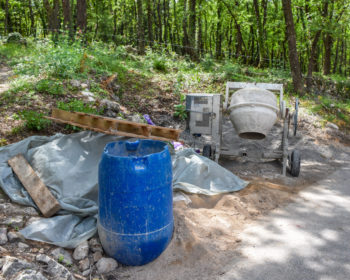 Writing an index can be like building a magnificent backyard storage shed one brick at a time, with no blueprint and no idea of what the finished product will look like.
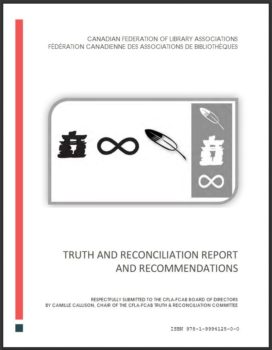 Last December, one of the topics that came up on the ISC-L list was the need to decolonize terms in the library classification system. In the ensuing thread, we heard that work was underway, driven mainly by the Canadian Federation of Library Associations (CFLA-FACLA).
 The ISC/SCI has, over the years, accumulated surplus funds. Some of these funds will be kept aside as a reserve in case of deficit. That still leaves some extra funds that we can spend.